Gabrielle Union Talks Hot Flashes, and I Am Taking Notes
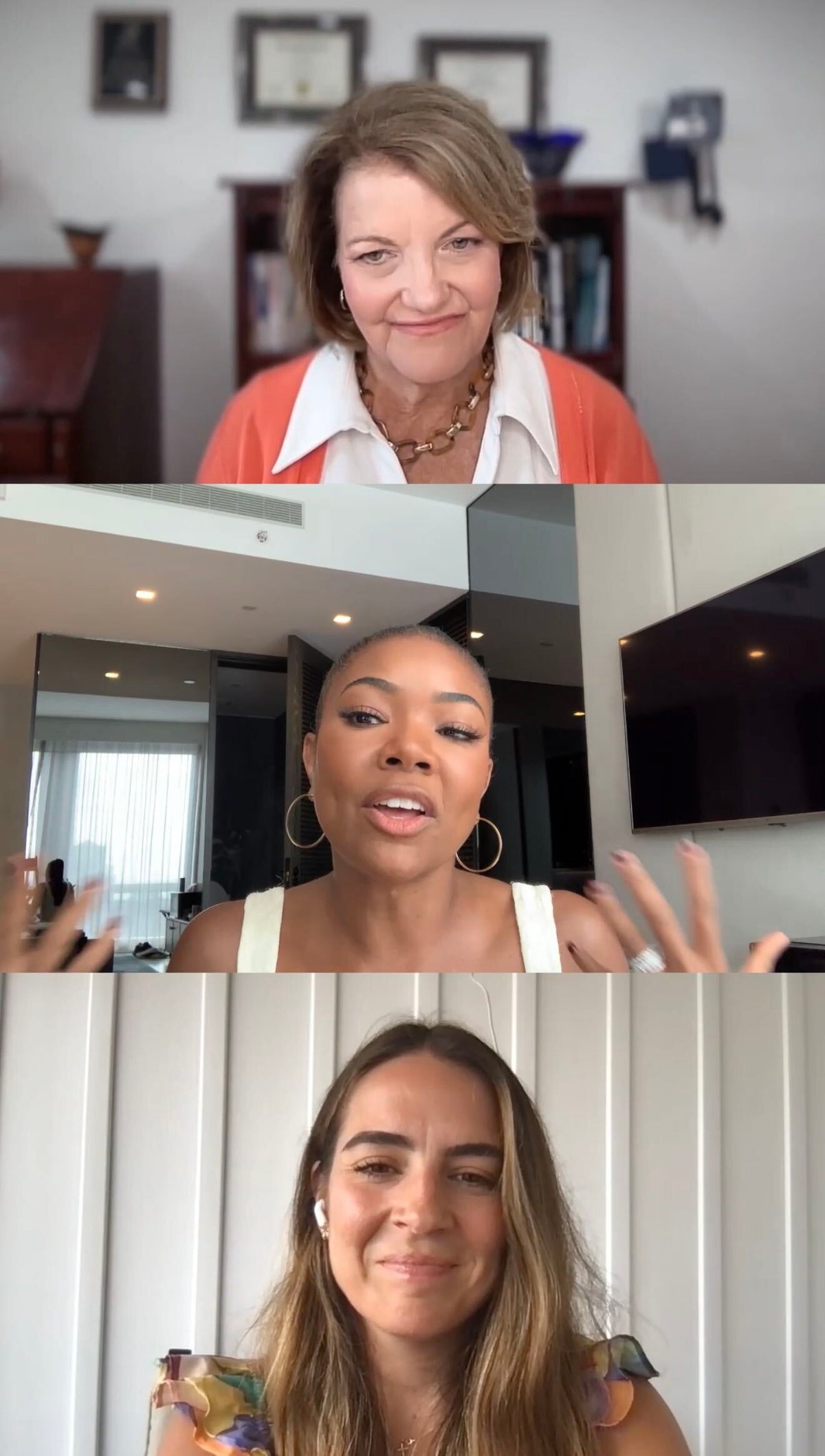
I recently had the pleasure of sitting down with Gabrielle Union-Wade, which, as someone who was a high school cheerleader in the early 2000s, was a major fangirl moment for me. But perhaps even moreso than her role in Bring It On, is my admiration for her unflinching openness about fertility, surrogacy, motherhood, and now, menopause.
She told me about shooting a sex scene with a costar twenty-plus years younger than her when a hot flash hit so hard she was instantly drenched. The crew thought she looked scared, but she wasn't; she'd done thousands of these scenes. She just felt herself shrinking, and Gabrielle Union does not shrink.
She'd learned she was perimenopausal in her late thirties, from a routine blood panel during a fertility workup, years before a single hot flash showed up. Then in her mid-forties, they arrived, and not the fleeting kind the name implies.
Nurse Barb, a nurse practitioner and certified menopause specialist on the call, said residents get one or two total hours of menopause education in training. I can't even get through a lasagna recipe in an hour.
About 1.3 million women enter menopause every year in the U.S., and hot flashes can stick around for seven years, some well over a decade. Researchers call those women "super flashers," which sounds like a superhero and decidedly is not.
After calling her doctor and saying, essentially, this cannot be life, Gabrielle found something that worked. But when I asked what she'd gained, she skipped past the treatment and went straight to the community: other women comparing notes, realizing they weren't the only ones white-knuckling it through a meeting, or in her case, a scene.
She didn't need a fix so much as she needed company, and I'd say the same goes for most of us.
Watch the full conversation on YouTube here.


More from GIRLHOOD