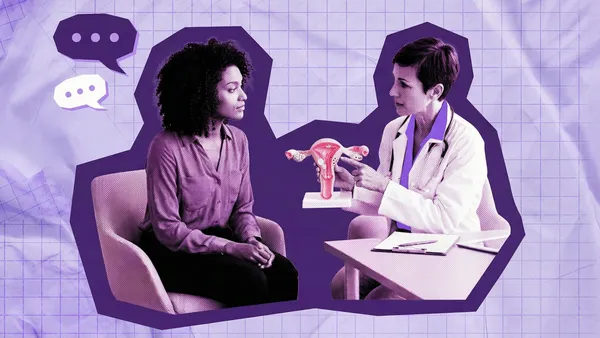
Let’s be honest: menopause has historically been packaged with a lot of… fluff. Soft language. Euphemisms. Vague “season of life” metaphors. Advice that somehow manages to be both patronizing and wildly unhelpful.
Meanwhile, according to the Society for Women’s Health Research, roughly 6,000 women in the United States reach menopause every day — many of them navigating night sweats that feel like someone set their mattress on fire, brain fog that makes you forget why you walked into a room (again), and a body that suddenly seems to operate under completely new rules.
For a long time, menopause was treated like something women should quietly endure — or worse, something that only happened to “older women,” far removed from the busy years of careers, parenting, and everyday life.
But that narrative is finally starting to crack.
More women are talking openly about perimenopause, hormone therapy, libido changes, sleep disruptions, and the long list of symptoms that rarely show up in health class. And many millennials, who grew up Googling everything from fertility to gut health, are realizing that menopause education needs a serious upgrade, too.
Why we need honest menopause books now more than ever
Thankfully, a growing group of authors is stepping in to fill the gap. These writers, doctors, journalists, and researchers are ditching the sugarcoating and telling the truth about what this transition actually feels like — physically, emotionally, and socially.
Some of these books are deeply researched science explainers. Others are memoirs or investigative deep dives. A few are equal parts education and feminist rallying cry. What do they all have in common? They refuse to pretend menopause is some serene “second spring.”
If you want menopause books that are honest, validating, occasionally hilarious, and not afraid to call out bad science or outdated advice, these reads tell it like it is.
Best menopause books that tell the truth about perimenopause and midlife
Whether you’re deep in the thick of perimenopause symptoms or just starting to notice something feels off, having the right information can make a huge difference. These books were written by doctors, journalists, and researchers who are done with the fluff and ready to tell the whole truth about what menopause actually looks like. From hormone therapy deep dives to feminist rallying cries, there's something here for every woman who deserves better than vague advice and a pat on the head.
1. The Menopause Manifesto by Dr. Jen Gunter
If you want a menopause book that politely pats you on the head and tells you to drink herbal tea and think positive thoughts… this is not it.
Dr. Jen Gunter, an OB/GYN known for calling out bad medical advice online, brings the receipts in The Menopause Manifesto. The book tackles everything from hormone therapy myths to vaginal health to why women’s health research has historically been underfunded.
What makes this book stand out is its tone. Gunter is funny, blunt, and absolutely allergic to pseudoscience. She explains what’s actually happening in your body during menopause and dismantles decades of misinformation along the way.
If you’ve ever left a doctor’s appointment thinking, Wait… that didn’t answer any of my questions, this book feels like the conversation you wish you’d had in the exam room.
2. What Fresh Hell Is This? by Heather Corinna
First of all, the title alone tells you everything you need to know.
What Fresh Hell Is This? is part menopause survival guide, part feminist rant, and part reassurance that you’re not, in fact, losing your mind.
Heather Corinna writes about perimenopause and menopause with a mix of humor, research, and deeply relatable storytelling. Rather than pretending menopause is some serene “new chapter,” the book dives headfirst into the messy reality: mood swings, anxiety, baffling new symptoms, and the emotional roller coaster that can come with midlife hormonal shifts.
One of the book’s biggest strengths is its inclusivity. Corinna expands the menopause conversation to include people who have long been left out of it — those with disabilities, as well as queer, transgender, nonbinary, and other gender-diverse individuals who experience menopause but rarely see themselves represented in the discussion.
At the same time, the book is deeply empowering. Corinna frames menopause not as an ending, but as a complicated transition that deserves better information, better healthcare, and a lot more honesty.
Basically, it’s the menopause book for people who appreciate a little righteous anger with their health education.
3. Estrogen Matters by Dr. Avrum Bluming and Carol Tavris, PhD
If you’ve ever tried to understand hormone therapy and walked away more confused than when you started, you’re not alone.
Estrogen Matters takes on one of the most controversial and misunderstood topics in menopause: hormone replacement therapy (HRT).
The book dives into the history of how fear around estrogen developed, particularly after early interpretations of large studies dramatically changed how doctors prescribed hormone therapy.
But this isn’t a fluffy “trust your intuition” guide. It’s a deeply researched examination of the science behind hormones, risks, and benefits written in a way that’s actually understandable.
Questions Women Are Asking
Even if you ultimately decide hormone therapy isn’t for you, the book arms you with something many women haven’t historically had: clear, evidence-based information that helps you make informed decisions about your health.
4. Hot and Bothered by Jancee Dunn
If you’ve ever Googled “Why am I suddenly sweating through my pajamas at 3 a.m.?” you’ll appreciate this one.
Journalist Jancee Dunn approaches menopause the way many women do: confused, curious, and slightly alarmed. Hot and Bothered chronicles her journey to figure out what’s happening in her body and what (if anything) can be done about it.
The result is part investigative journalism, part personal diary. Dunn talks to doctors, researchers, and other women navigating menopause, exploring everything from libido changes to sleep disruption to why menopause education is so often lacking.
The vibe is basically: I have questions, and I’m going to keep asking them until someone gives me a real answer. Which, frankly, is the energy menopause conversations have needed all along.
5. The New Menopause by Dr. Mary Claire Haver
If menopause had a PR department, it would probably hate this book.
Dr. Mary Claire Haver pulls no punches when discussing how unprepared most women are for menopause — and how poorly the medical system often handles it.
The New Menopause breaks down the science of hormonal changes while also addressing the everyday realities women experience: weight shifts, fatigue, mood changes, and metabolic changes that can feel completely unfair.
What readers appreciate most is the practical approach. Instead of vague advice about “wellness,” Haver focuses on strategies that actually help — nutrition, exercise, hormone therapy discussions, and advocating for yourself in healthcare settings.
Think of it as a menopause manual written by the doctor who’s tired of pretending everything is fine.
6. Millennial Menopause by Lauren A. Tetenbaum
If you thought menopause was something you’d worry about decades from now, Millennial Menopause might come as a bit of a wake-up call.

Lauren A. Tetenbaum, a psychotherapist who specializes in perimenopause and other life transitions affecting women, focuses on the reality that many women start experiencing perimenopause symptoms earlier than they expect. And for millennials juggling careers, kids, aging parents, and everything else life throws at them, those symptoms can feel especially disruptive.
What makes this book refreshing is how direct it is. Tetenbaum doesn’t tiptoe around the topic. She talks openly about things like brain fog, libido changes, sleep issues, weight shifts, and the emotional whiplash that can come with fluctuating hormones.
She also addresses one of the biggest frustrations women face: the fact that many healthcare providers receive limited formal training in menopause care. The result? Women often have to advocate for themselves or search for better-informed doctors to get the treatment and support they need.
Millennial Menopause combines science, practical advice, and a healthy dose of reality about what this stage of life can actually look like. It’s especially helpful for women who are starting to notice changes in their late 30s or early 40s and wondering, Wait… is this perimenopause already?
7. Flash Count Diary by Darcey Steinke
Not all menopause books are medical guides. Some are deeply personal explorations of what it means to move through this stage of life. Flash Count Diary is one of those books.
Darcey Steinke documents her experience with menopause in lyrical, sometimes surreal essays that blend science, history, and memoir. The book dives into hot flashes, aging, sexuality, and the strange cultural silence surrounding menopause. It’s raw and reflective, and it challenges the idea that menopause should be hidden or quietly endured.
Instead, Steinke treats menopause as something worth examining, philosophically, culturally, and emotionally. Which is refreshing in a world that often treats women’s aging as something to hide rather than discuss.
Getting informed is the first step to navigating menopause on your own terms
Menopause is messy. It’s unpredictable. It’s occasionally infuriating. And despite affecting literally half the population, it’s still one of the most under-discussed stages of women’s health. The good news? That silence is starting to break.
From investigative journalism to feminist manifestos to practical guides written by menopause specialists, these books are helping women of every generation — from Gen X to millennials entering perimenopause — understand what’s happening in their bodies and what their options actually are.
Because menopause deserves better than vague advice about “embracing the journey.” It deserves honest information, real conversations, and resources that don’t pretend everything is fine when it very clearly isn’t. And thankfully, these authors are delivering exactly that.