Is Influencer Hate Rooted in Misogyny? Let's Unpack the Discourse
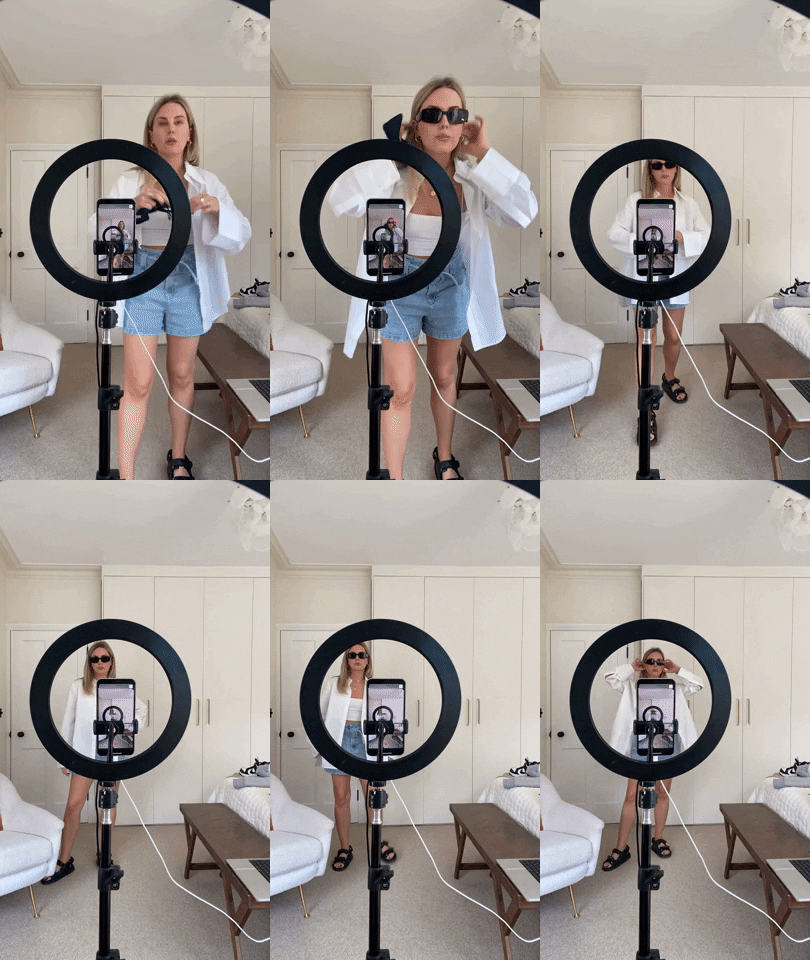
By now, you've all seen shots of the viral "NO INFLUENCERS" sign that was put up in a Nantucket shop.
Of course, the sign has elicited a lot of backlash. Some feel it's discriminatory, and yeah, you can't ban someone based on their occupation from entering a store. What you can ban, in my opinion, is influencer-y behavior: Taking photos of everything, filming interactions, getting people who may not consent to being on camera in your shots, holding up traffic...things like that.
But here's what many people are latching on to in this discourse around this particular sign, as well as the general societal taste for influencers: It all feels rooted in misogyny.
Influencing is, after all, practically the only female-dominated industry. It represents a way for women to make serious money, and it affords them the flexibility that is missing from the corporate world, which makes it an especially attractive path for moms.
So when people say that influencer hate feels sexist, I get it.
I do think there's some inherent discomfort with an industry in which women run the show — a world in which women both drive the attention economy and the actual economy. Influencing is a career path that actually works for the lives most women lead. And the flexibility, the community, the creativity...those are all things women tend to really value, the things we've been conditioned to pursue.
But as with most issues, this is nuanced. The reality is, social media drives, or at least accelerates, some really problematic things: Comparison, unrealistic beauty standards, warped lifestyle expectations, dangerous messages about womanhood and femininity, and rampant consumerism, to name a few. Influencers didn't create those problems, but some (maybe even many) of them profit off of feeding into them. Sometimes subliminally, sometimes overtly.
That's what makes all this so complicated. Because, yeah. Influencing as a viable, lucrative career path has made life a lot better for so many women, and that's worth celebrating. But also, it has made things more stressful, complicated, and fraught with insecurity for many women too..and that's worth critiquing.
Ask Clara:

"What is the wage gap?"

More from BODYTALK