I think about my friend Lisa every day, but especially when I go in for my annual mammogram. She died of breast cancer at just 31. She had a family history but no known mutation. Just a nagging pain in her armpit that turned out to be something much worse.
After she passed, I couldn't shake the feeling that I needed to look deeper into my own risk. A simple blood test through genetic screening revealed that I carry the ATM gene mutation, which increases the risk of developing breast cancer over a lifetime. That knowledge changed how I show up for my health — and for my three kids.
What they don't tell you (but should)
If you're reading this, chances are you just got your own results back. You're scared, you're Googling, and you're not sure whether to panic or breathe. Here are three things most women aren't clearly told when they receive a positive ATM result:
Your risk is real but meaningfully different from BRCA. ATM sits in a middle ground that requires nuance, not alarm.
The science and guidelines are still evolving. If your provider seemed uncertain or noncommittal, that's not a failure on their part; it's the reality of where the research stands right now.
You have more agency than the diagnosis moment suggests. Surveillance, contraception, HRT decisions, lifestyle, genetic counseling — these are all conversations you get to have and choices you get to make.
In this article, we’ll get into what the nuance actually looks like and what you can do about it.
What is the ATM gene mutation?
ATM stands for Ataxia-Telangiectasia Mutated, but the name matters less than what the gene actually does. ATM is a tumor suppressor gene. Its job is to detect DNA damage and coordinate repair. When it's working properly, it acts like a quality-control system for your cells. When it's mutated, that repair process doesn't work as efficiently as it should.
Everyone has two copies of the ATM gene — one from mom, one from dad. There's an important distinction here. A biallelic mutation (both copies affected) is associated with ataxia-telangiectasia, a rare and serious neurological condition. A monoallelic mutation (one copy affected) is what most people mean when they talk about ATM in the context of hereditary cancer risk, and it's almost certainly what your results are referring to.
"Being ATM positive does not mean you will absolutely get cancer. Many women live long, healthy lives, but there is an elevated, predisposed risk. That's why we want to make sure ATM-positive patients are getting the best screening they can," says Stephanie Nunziato-Virga, Lead Hereditary Cancer Genetic Counselor at GeneScreen.
How common is the ATM gene mutation?
ATM mutations are actually more common than many people realize. According to the American Cancer Society, roughly 1 in 100 people in the general population carry an ATM variant. It's one of the most frequently identified variants on expanded hereditary cancer panels, which means a lot of people are getting this result right now, and many of them don't know what to do with it.
If you're sitting with your results feeling overwhelmed by information that's either too clinical or too alarming, you're not alone. The gap between "you have a mutation" and "here's what that actually means for your life" is real, and it's one of the biggest problems with how these results are delivered.
ATM gene mutation and cancer risk: what the research actually says
Here's what we know, and what still remains uncertain.
Breast cancer: ATM is classified as a moderate-risk breast cancer gene. According to Nunziato, carriers have approximately a 21-24% lifetime breast cancer risk, roughly double that of the general population (which sits around 12%). That's meaningfully elevated. But it's not equivalent to BRCA1/2 mutations, which can push lifetime risk to 70% or higher. According to a 2022 update to the National Comprehensive Cancer Network (NCCN) guidelines, ATM is categorized among moderate-penetrance genes that warrant enhanced surveillance but typically not the same aggressive interventions recommended for BRCA carriers.
Pancreatic cancer: ATM carriers face an estimated 5-10% lifetime risk of pancreatic cancer (in both women and men), compared to about 1.5% in the general population. Nunziato notes that when a woman reaches 50, pancreatic screening should be incorporated into her management plan.
Ovarian cancer: The risk is slightly elevated, roughly 2-3% compared to 1.5-2% in the general population, but it's still relatively rare. Updated data continues to emerge in this area.
Colon cancer: There may be an elevated risk as well, with estimates around 5-10% compared to roughly 3.5% in the general population.
One of the key things "they don't tell you" is that not all ATM variants carry the same risk level. The distinction between a pathogenic variant, a likely pathogenic variant, and a variant of uncertain significance (VUS) matters enormously. A VUS means the lab identified a change in the gene, but doesn't yet have enough evidence to say whether it actually increases risk. This is why a genetic counselor is essential for interpreting your individual results, because the variant type changes everything about what comes next.
ATM gene mutation positive: what happens next
The emotional weight of a positive result is real. Give yourself permission to sit with that. Then, take action.
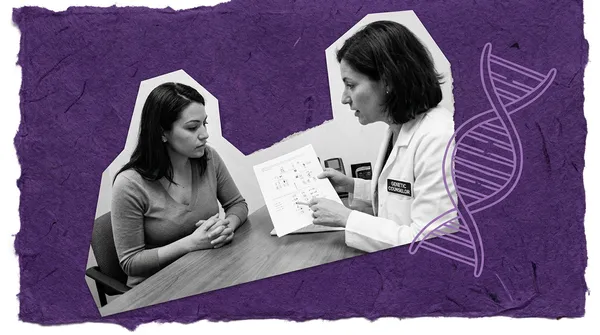
Your first step is genetic counseling. If you haven't already had it, and even if you have, a follow-up may be warranted as guidelines continue to evolve. According to Nunziato, a multi-disciplinary approach is key, and risk management depends on whether you're in your 20s, 30s, 40s, or beyond.
A genetic counselor helps interpret your specific variant, contextualizes your family history, outlines surveillance and risk-reduction options, and facilitates conversations with family members about cascade testing. Your siblings and children each have a 50% chance of carrying the same variant.
For those in the reproductive planning stage, there's another consideration worth knowing about: if both you and your partner test positive for the ATM gene, IVF with preimplantation genetic testing is available to avoid passing on two copies, which would result in ataxia-telangiectasia in a child.
Finding a genetic counselor
The National Society of Genetic Counselors (NSGC) has a find-a-counselor directory that makes it easy to locate someone near you. Telehealth genetic counseling is widely available and has expanded access significantly. Many people receive genetic testing results without ever speaking to a genetic counselor; don't let that be your story.
Breast cancer surveillance for ATM mutation carriers
Surveillance recommendations vary by institution and continue to evolve, but here's the general framework based on current guidelines and Nunziato's clinical recommendations:
Annual mammogram and sonogram starting at age 40
Annual breast MRI starting around age 30-35, often staggered six months from mammography so you're getting imaging every six months
Clinical breast exams at both your annual physical and your annual OB/GYN (Pro tip: spread those appointments out by six months so you're getting a clinical exam every six months!)
Monthly breast self-exams — know your breasts, report changes, and consider apps like Feel For Your Life to help you stay consistent
Meeting with a breast specialist for personalized recommendations is also worth pursuing. A 2023 NCCN update published in the Journal of the National Comprehensive Cancer Network specifically recommends annual breast MRI with contrast in addition to mammography for women with ATM mutations, reflecting the growing consensus around enhanced screening for moderate-risk carriers.
Enhanced surveillance doesn't eliminate risk, but it dramatically improves the odds of catching something early, when it's most treatable. The goal isn't to live in fear. It's to be proactive and informed.
For ovarian screening, there are no ATM-specific recommendations at this time, but make sure your gynecologist is aware of your elevated risk. Know your body and cycle, report anything out of the ordinary, and ask for an ultrasound for peace of mind. CA-125 is a blood marker test that can also be part of the conversation.
ATM gene mutation and birth control: what you should know
Some research suggests that exogenous estrogen may influence breast cancer risk in women with hereditary mutations. The data for ATM specifically is limited, but it's worth a conversation with your provider.
This does not mean hormonal birth control is off the table. It means the decision deserves an informed, individualized discussion. Options to explore:
Progestin-only options (mini pill, hormonal IUD, implant) — often considered lower-risk for those with elevated breast cancer risk
Non-hormonal options — copper IUD, barrier methods
Don't make changes without talking to a provider, but do have the conversation proactively. Most providers won't raise it unless you do.
ATM gene mutation and HRT: navigating menopause with elevated risk
Can you take hormone replacement therapy for menopause symptoms without meaningfully increasing breast cancer risk? The data for ATM specifically is limited. Most guidance extrapolates from general elevated-risk populations and from BRCA research, which doesn't perfectly apply.
The conversation with your provider should include: severity of symptoms, your specific ATM variant and associated risk level, personal and family history, and whether non-hormonal options have been tried. Non-hormonal alternatives worth knowing about include SSRIs/SNRIs for hot flashes, gabapentin, vaginal estrogen (which has minimal systemic absorption and is generally considered lower-risk), and ospemifene for vaginal symptoms.
Some providers and researchers do support short-term, low-dose HRT for ATM carriers with significant quality-of-life impact. This is not a black-and-white issue; it's a conversation worth having.
ATM gene mutation diet and lifestyle: what actually moves the needle
Wanting agency over your health is reasonable and healthy. No diet prevents cancer, but lifestyle factors that reduce overall inflammation and support immune function are broadly supported by research.
What the evidence supports:


Limiting alcohol — one of the most evidence-backed modifiable breast cancer risk factors. A population-based study published in The Lancet Oncology confirmed that even moderate alcohol consumption is associated with increased breast cancer risk.
Maintaining a healthy weight — adipose tissue produces estrogen, which can influence hormone-receptor-positive breast cancer risk
Regular physical activity — associated with reduced breast cancer risk across multiple large-scale studies
A predominantly whole-food, plant-forward diet — broadly anti-inflammatory
Avoiding smoking
What's less supported: specific supplements, extreme elimination diets, or any protocol marketed specifically for gene mutation carriers. The evidence is thin, and the marketing in this space can be predatory. Be discerning.
How is ATM gene mutation treated? (Let's reframe that question)
The mutation itself isn't treated; the risk is managed. That management includes enhanced surveillance, lifestyle modification, informed decisions about hormones and contraception, and potentially chemoprevention. Medications like tamoxifen or raloxifene are options some higher-risk women discuss with their providers for breast cancer risk reduction.
Bilateral mastectomy is generally not recommended for ATM carriers the way it may be for BRCA1/2 carriers, given the more moderate risk profile. But individual circumstances vary, and this is worth discussing with a breast specialist.
Management is not one-size-fits-all. It's built around you — your specific variant, your family history, and your personal values.
Living with an ATM mutation: you get to write this chapter
One in eight women will be diagnosed with breast cancer in her lifetime. Eighty-five percent of those diagnosed have no family history. Early detection saves lives, and knowing your ATM status gives you a meaningful head start.
The women who navigate this best are the ones who stay informed, build a care team they trust, and make decisions that align with their values. The most important thing they “didn't tell you” is that you have more options and more agency than that diagnosis moment may have felt like.
If you've been putting off your mammogram, consider this your nudge. If you're curious about your own risk, ask your doctor about genetic screening and breast cancer risk assessment. It could make all the difference.